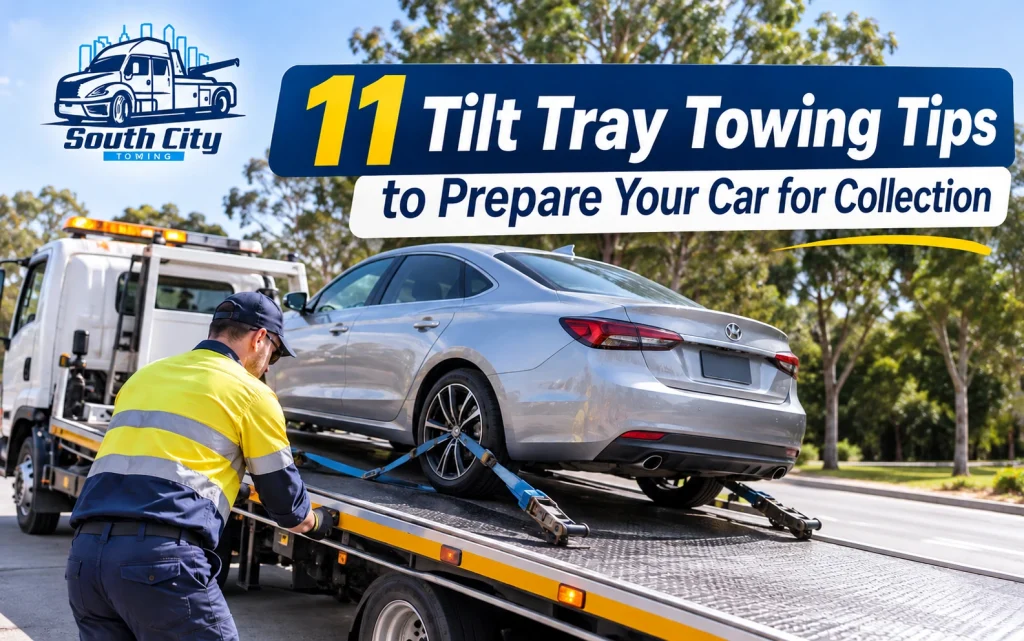
11 Tilt Tray Towing Tips to Prepare Your Car for Collection
A tilt tray pickup can take ten minutes or turn into an hour of waiting around. Most of that difference comes down to what happens before the truck arrives.
The good news is that most pickup delays can be avoided. A missing key fob, a car park the truck can’t fit into, or a workshop that closed an hour ago can all be sorted with one phone call and a few minutes of preparation.
Below, we’ll show you how to prepare your car for tilt tray towing with 11 practical tilt tray towing tips, grouped by when you’ll need them: when you book, before the truck arrives, and at handover. If you’d like to know what happens once loading starts, we’ve explained the tilt tray loading process.
When You Book
1. Pin the Exact Pickup Location and Describe the Access
A street address isn’t always enough. Drop a map pin from your phone, then add the details a driver can’t see on a map:
- The level and bay number, if it’s in a car park
- Gate codes, swipe access or a building manager’s number
- Nearby landmarks, if you’re on a highway or rural road
The driver can then come straight to your car instead of circling the block, which means a shorter wait for you.
→ In apartment and shopping centre car parks, check whether a tow truck needs permission to come in. Sorting that early means no standing around at the boom gate.
A tilt tray needs room behind your car and height above it. Mention:
- Height limits shown on the car park entry sign
- Steep driveways, narrow laneways or tight turns
- Sand, gravel or wet grass where the truck will park
Not sure how to describe it? A photo of the entry and where the car sits often tells us more than words. A minute spent on this can spare you a wasted trip and a second call out.
2. Tell Us Exactly What You Drive
Make and model is a good start, but a few extra details change which truck and equipment we bring:
- AWD, 4WD or electric
- Lowered or air suspension, body kits or a front lip
- Roof boxes, bike racks or a tow bar
Getting this right the first time means the truck turns up ready for your car, so you’re not left waiting while a different one is sent out. These are also the vehicles where a tilt tray matters most, so it’s worth knowing when tilt tray towing is useful before you book.
Internal Link here: Benefits of Tilt Tray Towing
3. Be Honest About Its Condition
It’s easy to say “it just won’t start” and leave it there. The more specific you are, the better we can plan:
- Does it start, roll and steer?
- Is it stuck in park, or will the parking brake not release?
- Are there flat tyres, locked wheels or crash damage?
- Have you noticed any leaks, smoke or warning lights? Only check if it’s safe to do so.
Clear details also give you a more accurate quote, with fewer surprises once the truck arrives.
If it’s an EV that’s been in a crash, say so straight away. A damaged EV battery can catch fire hours, days or even weeks after the incident, so the operator needs to know before loading.
4. Confirm Where the Car Is Going
Delays often happen at the drop-off, not the pickup. Before you book, confirm:
- The full address and business name
- Opening hours, and whether there’s an after-hours drop zone or key box
- A name and number for whoever is receiving the car
If it’s going to a workshop, call ahead. Some won’t accept a car without notice, especially late in the day. Sorting this now stops your car ending up in storage overnight, which is one of the things that can quietly push up what you pay for towing in Perth.
5. Ask What the Quote Includes and Check Who You’re Booking
A clear quote should tell you what’s covered and what could change the price, such as extra kilometres, after-hours timing, or extra equipment for a car that won’t roll. Ask these questions before you agree, not after the job.
That way you know exactly what you’ll pay, and there are no surprise charges at the end.
Not every tow truck is the right truck for your car. Before you commit, look for:
- Recent reviews that mention careful handling and tilt tray work
- A clear, upfront quote with no vague extras
- Questions about your car’s condition and access, which shows the company plans properly
A few minutes of checking can protect you from damage, delays or a bill that doesn’t match the quote. A price that sounds too good to be true often comes with surprises, and these risks of cheap towing companies are worth knowing before you choose.
Before the Truck Arrives
6. Put Your Safety First
If you’ve broken down on the road, your car can wait, but your safety can’t. Get yourself and any passengers well away from traffic before doing anything else on this list. Everything below can be done once you’re somewhere safe.
7. Take Out Anything You’ll Need
Your car may sit at a workshop for days. Before the truck arrives, grab:
- Your wallet, phone charger, sunglasses and any medication
- House keys and garage remotes, taken off the car key ring
- Child seats, if you’ll need them in another car
- Tools and gear from the tray or canopy of a ute
You won’t need to make an extra trip to the workshop just to fetch something. Only do this when it’s safe, and never while standing on a busy road shoulder.
8. Photograph the Car First
Walk around the car and take clear photos of every side, the wheels and any existing damage. Add one of the odometer. It takes two minutes and gives you a clear “before” record, which makes any question or claim much quicker to sort out later. Our emergency towing checklist explains what else is worth recording if you’ve broken down or had a crash.
Our operators also photograph existing damage on arrival, so you’ll both have the same record.
9. Have Every Key Ready
One key isn’t always enough. Many modern cars need the key fob inside the car to unlock the steering or shift out of park, and many fobs hide a small mechanical key for when the battery is flat. Have these ready:
- The main key or fob
- The locking wheel nut key, if your car has one, because the workshop will need it
- Any aftermarket alarm or immobiliser remote
Driving an EV? Look up how to switch on Tow or Transport Mode in your owner’s manual or app before the truck arrives. Some EVs need 12V power to do this, so tell us if that battery is flat.
With every key on hand, loading goes more smoothly and there’s less risk of damage from moving a car that’s locked in park. If the car is stuck in park, don’t try to force it. Tell the operator and follow their advice and your owner’s manual.
10. Close Up the Outside
Wind up the windows, close the sunroof and fold in the mirrors if you can. Take off anything loose on the outside, such as roof box contents, bike racks or a removable tow ball. If your alarm might go off during loading, switch it off or show the operator how.
This keeps rain and dust out while your car sits at the workshop, and stops loose parts from working free on the road.
At Handover
11. Agree the Handover Before the Truck Leaves
Before your car heads off, confirm three things with the operator: where it’s going, roughly when it’ll arrive, and who will receive it at the other end. You’ll know exactly where your car is, rather than chasing updates later.
Keep any paperwork you’re given. We provide delivery documentation and a service completion report, which can help if you’re making an insurance claim.
Common Prep Mistakes and What They Cause
Treat the 11 tips above as your tilt tray towing checklist. Here’s what tends to go wrong when a step gets skipped:
|
Mistake |
What happens on the day |
|---|---|
|
Not mentioning the car park height limit |
The wrong truck may be sent, and the job has to be rebooked |
|
Leaving the key fob at home or work |
The car may stay stuck in park, making loading slower |
|
House keys left on the car key ring |
You’re locked out of home while the car sits at the workshop |
|
No contact at the destination |
The car can’t be dropped off and may need storage |
|
Not saying an EV has been in a crash |
The operator misses vital safety information |
|
Not mentioning a lowered car |
The truck arrives without the right setup for a low loading angle |
Ready to Book? South City Towing Makes Collection Easy
At South City Towing, we’d rather spend five minutes on the phone with you than an hour at the roadside. Tell us your car, its condition and where it’s parked, and we’ll match the right truck to the job. You can even upload photos through our quote form, so we can see the access before we arrive.
Our team is available 24/7 across Perth and regional WA, with clear pricing and no hidden fees. When you’re ready, book tilt tray vehicle collection in just a few minutes.
FAQs
Do I need to be there when my car is collected?
Not always. If you can’t be there, agree in advance where the keys will be, how the truck gets access and who the operator should call.
Should I lock my car before it’s towed?
Only if you’re handing the keys to the operator. Never lock the car with the keys inside, as the operator needs access to the steering, gears and brakes.
Should I leave my car in park or neutral?
Leave it as it is and tell the operator. The right setting depends on your car and its condition, so they’ll follow your owner’s manual.
Can I say no to a tow truck after a crash in WA?
Yes. The WA Department of Transport and Major Infrastructure confirms you can decline the first truck and choose who tows your car and where it goes.
Do I pay the tow driver on the day?
It depends. If your insurer arranges or covers the tow, they often pay the operator directly. Otherwise, confirm how and when to pay when you book.
What should I do if I spot new damage after the tow?
Compare it with your “before” photos, raise it with the towing company straight away and keep all your paperwork. Clear evidence makes it much easier to resolve.