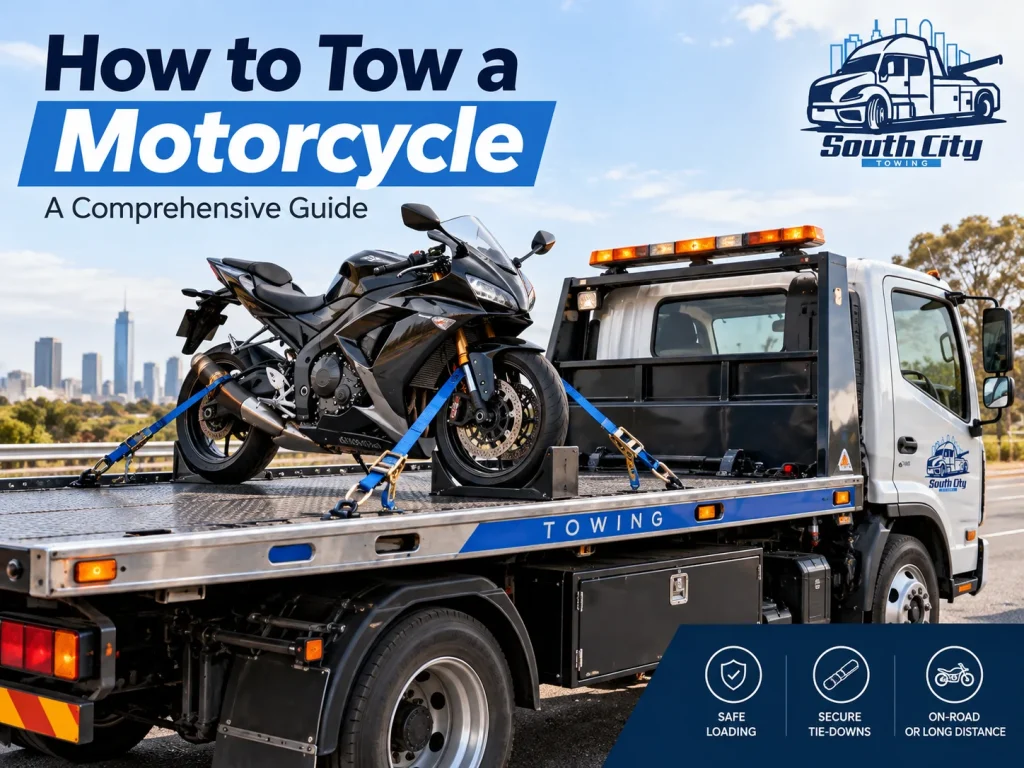
There are two ways to get a motorcycle from A to B without riding it: tow it behind a vehicle using a trailer or carrier, or have it transported on a tow truck or flatbed. The right choice depends on whether the bike is roadworthy, how far it’s travelling, and what equipment you have access to.
If your bike runs and steers fine, a trailer or hitch carrier behind your own car can work. If it’s damaged, won’t roll, or you simply don’t have the right gear, a tow truck or tilt tray is the safer bet.
Both methods are covered below, along with the WA rules that apply and the mistakes that cause the most damage.
Transporting a Motorcycle With a Tow Truck or Trailer
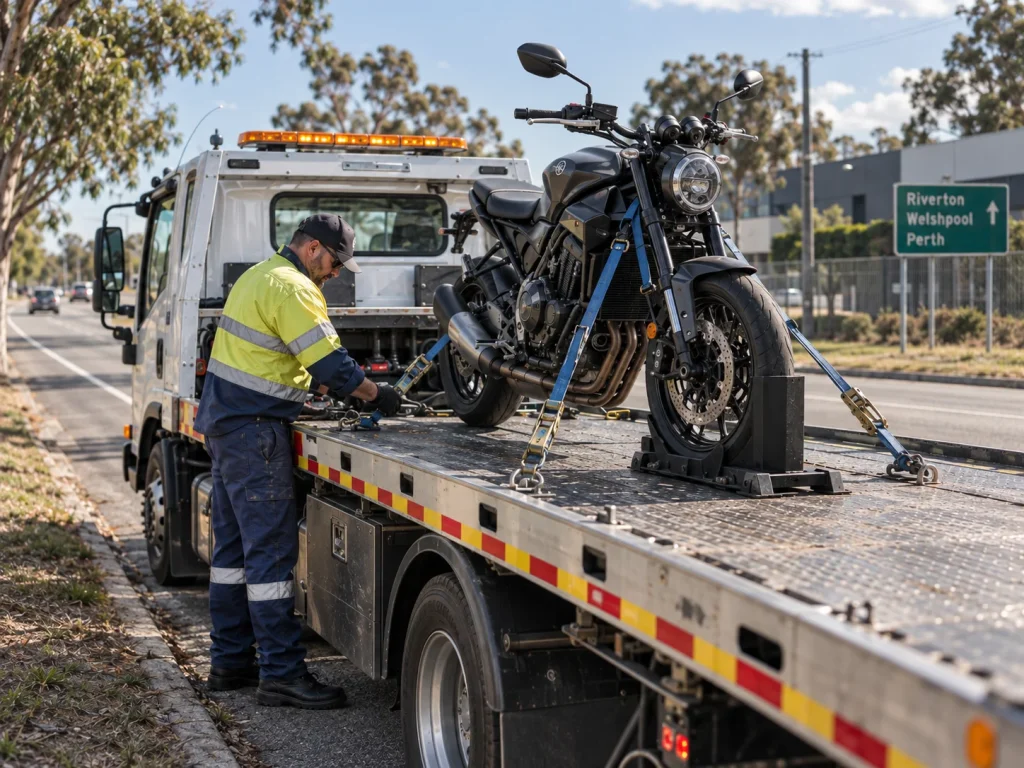
A tow truck or flatbed is the right call the moment your bike can’t be ridden or rolled safely. Fork damage, a seized wheel, a dead engine after an accident, or a bike that simply won’t balance are all signs this is a job for professional equipment, not a DIY trailer.
Flatbed and tilt tray transport carries the motorcycle fully off the ground on a flat, level deck. The tray tilts down to create a gentle loading angle, so there’s no ramp to wobble on and no risk of the bike tipping mid-load. This is the method South City Towing uses most for non-running bikes, accident recovery, and long-distance moves across Perth or out towards Mandurah and the Perth Hills.
It’s also the safer choice for expensive or modified bikes. A tilt tray keeps ground clearance issues, exhaust systems, and lowered suspension completely out of harm’s way, something a standard trailer can’t always guarantee.
Disclaimer: South City Towing provides motorcycle towing and transport using professional trailers and tow trucks only. References to other vehicle types or towing methods in this blog are provided for general informational purposes and do not represent services offered by South City Towing. Availability and towing methods vary depending on the motorcycle, its condition, location and recovery requirements.
Towing a Motorcycle Behind Another Vehicle
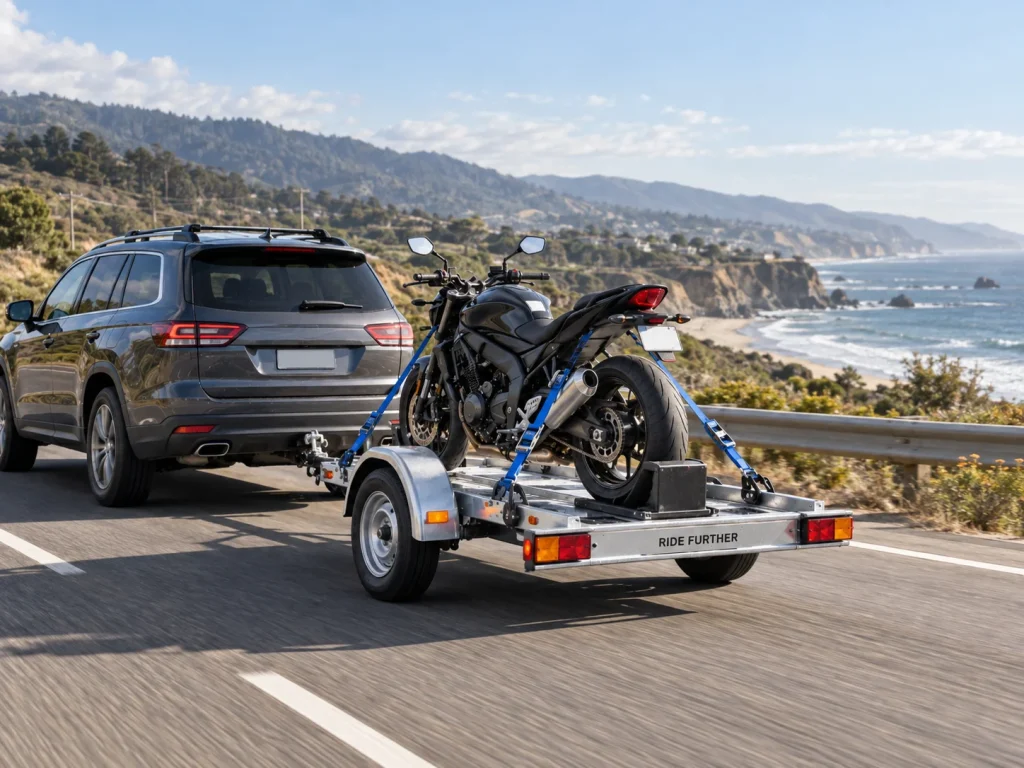
This method suits riders with a roadworthy bike, a suitable tow vehicle, and the right trailer or carrier on hand.
Two setups are common. A motorcycle trailer carries the bike fully off the road, with wheel chocks and anchor points built in. It’s the steadier option for heavier machines like a Harley or a BMW GS, since the bike never has to balance on its own wheels while moving.
A hitch carrier (sometimes called a motorcycle mount or tow dolly) bolts onto your tow ball and holds the bike upright with a wheel clamp. It’s lighter, cheaper to hire, and fine for smaller commuters and scooters, but it isn’t built for cruisers or adventure bikes carrying luggage and fairings.
Whichever setup you use, match it to your tow vehicle’s rated towing capacity and your bike’s weight. Overloading a hitch carrier is one of the fastest ways to damage both the bike and your car’s rear suspension.
How to Tow a Motorcycle Safely
Whether you’re using a trailer, a hitch carrier, or booking a tilt tray, the process follows the same core sequence. Get each stage right, and the bike arrives exactly as it left.
Choose the Right Towing Setup
Match the equipment to the bike, not the other way around. A trailer suits heavier cruisers and tourers, a hitch carrier suits lighter commuters, and a tow truck suits anything that’s damaged or won’t roll. Check your tow vehicle’s towing capacity against the combined weight of the trailer and bike before you commit to a DIY tow.
Prepare Your Equipment and Motorcycle
Lay out your gear before the bike goes anywhere: heavy-duty ratchet straps, soft loops (to protect paintwork and cables from strap damage), a wheel chock, a wide loading ramp, and gloves. On the bike, drop the tyre pressure slightly for stability, fold in the mirrors, and disconnect anything loose like panniers or a tank bag.
Load and Secure the Motorcycle
Walk or roll the bike up the ramp in a straight line, never at an angle. Once it’s centred in the wheel chock, attach soft loops to solid points: the handlebars, the frame near the headstock, and the rear footpegs or subframe, then run ratchet straps in an X pattern for stability. Tighten evenly on both sides so the bike doesn’t lean.
Check Everything Before You Drive
Before you move an inch, walk the whole rig. Push the bike side to side to test the tie-downs, check the trailer or carrier connection is locked, confirm the tow vehicle’s lights and indicators are visible, and make sure you haven’t exceeded the trailer’s or hitch carrier’s weight limit. This two-minute check catches most towing failures before they happen.
Tow and Unload Safely
Drive smoothly. Accelerate and brake gently, take corners wider than usual, and leave extra following distance since a loaded trailer changes your stopping distance. On arrival, release straps evenly from both sides before rolling the bike down, and have a second person steady it if the surface isn’t flat.
Motorcycle Towing Rules and Requirements in WA
Towing rules in Western Australia sit under the Road Traffic Code 2000, and a few points matter most for motorcycle owners. The maximum legal speed for any vehicle towing a trailer, caravan, or another vehicle in WA is 100km/h, regardless of the posted limit, as confirmed in Transport WA’s official Drive Safe handbook.
Beyond speed, WA law requires that any load, including a motorcycle on a trailer or carrier, is properly restrained so it can’t shift or fall during transport, and that all trailer lights, indicators, and number plates remain visible at all times.
The Road Traffic Code 2000 sets out the finer detail on towing connections, distance, and visibility requirements, and these can change, so it’s worth checking the current version before a long tow.
If you’re ever unsure whether your setup meets the current rules, a licensed towing operator already carries compliant equipment, which removes the guesswork entirely.
Choosing Between DIY Towing and Professional Transport
Option | Best For | Main Consideration |
DIY trailer or carrier | Roadworthy bikes and a suitable tow vehicle | Needs the right equipment and correct setup |
Tow truck or flatbed | Damaged or non-running bikes | Safer loading and transport |
Tilt tray | Difficult or inaccessible bikes | Uses professional loading equipment |
Specialist motorcycle transport | Valuable or long-distance bikes | Specialist handling throughout |
If your bike is roadworthy and you’re confident in your equipment, DIY towing over a short distance can work. But once distance, bike value, or bike condition become factors, the cost of a professional tow is usually cheaper than the repair bill from a strap failure or a tipped bike.
Common Motorcycle Towing Mistakes to Avoid
Mistake | How to Avoid It |
Using cargo straps instead of soft loops | Soft loops spread pressure evenly and protect cables, brake lines and paintwork |
Over-tightening one side of the tie-down | Tighten both sides evenly so the bike stays centred and upright |
Skipping the wheel chock | A chock stops the front wheel pivoting mid-transit, which is what causes most tip-overs |
Ignoring the tow vehicle’s capacity | Overloading strains the tow vehicle’s suspension and brakes |
Not checking straps after the first few kilometres | Straps settle early in a trip, so a quick recheck after 5 to 10km prevents loosening |
Towing a damaged or non-running bike on a trailer | A bike that can’t balance itself needs a flatbed or tilt tray, not a standard trailer |
Get Reliable Motorcycle Towing From South City Towing
As Perth’s trusted motorcycle towing service, South City Towing operates out of Kenwick and covers Perth metro plus extended WA regions, 24 hours a day, seven days a week. The fleet includes GPS-tracked tilt trays and flatbeds sized for everything from a scooter to a fully loaded touring bike, and every operator is WA licensed.
If a strap fails or a trailer isn’t rated for the job, that’s exactly when a call to the professionals saves the bike, not after. If you’ve made towing mistakes before, our guide on common towing mistakes covers the errors that damage vehicles most often, motorcycles included.
Book South City Towing for Your Next Motorcycle Move
South City Towing has spent years moving Perth’s motorcycles safely, from weekend breakdowns in the hills to accident recovery on the freeway.
As motorcycle transport specialists, the team knows the difference between a Harley, a Triumph Tiger, and a Yamaha Ténéré, and loads each one accordingly.
FAQs
Can you tow a motorcycle with a car dolly?
Standard car dollies aren’t designed for two-wheeled balance. Use a purpose-built motorcycle trailer or hitch carrier with a wheel chock instead, or book a flatbed for anything that can’t self-balance.
Do you need a special licence to tow a motorcycle trailer in WA?
Most light motorcycle trailers fall under a standard car licence, provided the combined towing weight stays within your vehicle’s rating. Heavier setups may need a higher licence class, so check before you tow.
Is my motorcycle insured while it’s being towed?
Coverage depends on your policy and how the bike is being moved. Many insurers require professional transport for claims related to towing damage, so check your product disclosure statement first.
What size car do I need to tow a motorcycle trailer?
The tow vehicle’s rated towing capacity needs to exceed the combined weight of the trailer and motorcycle, including straps and gear. A mid-sized SUV or ute generally handles a single bike trailer comfortably.
Can I tow two motorcycles on one trailer?
Only if the trailer is rated for it and your tow vehicle’s capacity covers the combined weight. Double motorcycle trailers exist, but incorrect weight distribution between the two bikes is a common cause of trailer sway.